What is a COA? How to Use it and How to Automate it
What is a CoA?
A Certificate of Analysis (COA) is an official document issued by a lab that confirms a product has been tested and meets required quality and safety standards. It provides verified proof — for manufacturers, clients, and regulators — that a specific batch of product is safe, consistent, and compliant.
COAs are used across contract labs, QC labs, and testing facilities worldwide. Whether you're testing pharmaceuticals, food products, chemicals, or environmental samples, a COA is the document that backs up your results.
What does a COA include?
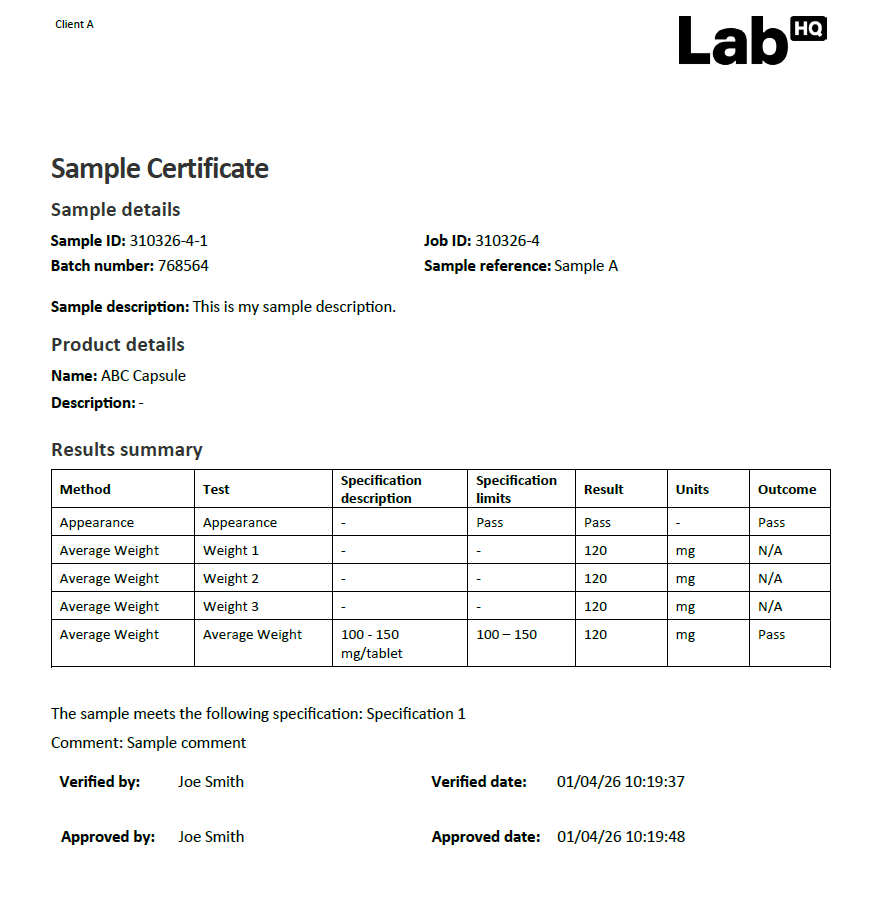
A standard Certificate of Analysis (COA) typically contains:
- Product identification — product name, batch number, lot number
- Sample details — how and when samples were collected
- Test methods — the analytical techniques used (e.g. chromatography, microbial analysis)
- Specifications and results — test data compared against predefined standards, with a clear pass/fail
- Lab information — name of the issuing laboratory and the authorised person who verified and approved the results
- Authorised signature — sign-off from a qualified quality assurance professional
What does a COA look like?
What Industries and Labs Use COAs?
The widespread application of COAs across industries underscores their critical importance in maintaining safety, quality, and compliance. These documents are indispensable tools for ensuring consistency and reliability, not only within individual sectors but also throughout global supply chains. The ability to demonstrate quality and adherence to regulatory standards through a COA is fundamental to building trust and credibility in any industry. For contract and QC labs, this broad application underscores the need for flexibility and precision in COA creation.
COAs in Action: Use Cases Across Regulated and Non-Regulated Industries:
Oil & Gas
COAs in the oil and gas industry verify the chemical composition and quality of fuels and petroleum products, ensuring compliance and operational safety.
Microbiology
Microbiology labs use COAs to confirm sterility, microbial counts, and contamination levels, supporting regulatory compliance and public health.
Contract Labs
Contract laboratories issue COAs to validate product quality and compliance, fostering trust and transparency in outsourced testing.
Veterinary
In veterinary science, COAs confirm the safety and potency of medications, vaccines, and feed supplements to safeguard animal health.
Environmental
Environmental labs rely on COAs to document air, water, and soil quality, ensuring adherence to environmental standards and regulations.
Materials and Mining
COAs in materials and mining verify the purity and properties of minerals and metals, ensuring quality and industry compliance.
Pharmaceuticals
Pharmaceutical labs rely on COAs to confirm the purity, potency, and safety of active ingredients and finished products, adhering to stringent guidelines like FDA and GMP standards.
Food & Beverage
In the food and beverage industry, COAs validate the safety and nutritional accuracy of consumable goods, protecting consumers and ensuring regulatory compliance.
Fertilizers & Pesticides
For agricultural inputs like fertilizers and pesticides, COAs provide critical data about nutrient levels and chemical residues, supporting sustainability and safety efforts.
Petrochemicals
The petrochemical sector uses COAs to verify the composition and purity of materials, ensuring compliance with OSHA and EPA standards.
Novel Markets
Emerging markets like cannabis and psychedelics also depend on COAs to document potency and purity, adapting to evolving regulations and safeguarding consumer safety.
From validating the sterility of medical devices, to validating water safety, to ensuring dye consistency in textiles, COAs are integral across even the most niche sectors.
With such varied and critical applications, the ability to create accurate, reliable COAs has become not only essential but also an opportunity for labs to differentiate themselves in a competitive landscape.
Adding a Competitive Edge with Modern Insights
COAs are more than documentation—they are a ticket to market entry and client retention. For contract and QC labs, COAs serve as critical evidence of compliance in a landscape where regulators like the FDA, EPA, and international bodies demand not only accuracy but also verifiable proof of how results are generated, stored, and reported.
This increasing regulatory scrutiny has turned traditional, manual COA creation into a liability. A single error or missing detail can lead to non-compliance, costly recalls, or legal action. At the same time, clients expect greater transparency, relying on detailed, error-free COAs to build confidence in their supply chains.
Automating COA processes offers labs a chance to not only meet these demands but also to stand out by delivering precision, reliability, and trust—securing their competitive edge in a shifting regulatory landscape.
How to Create a COA
Traditional COA creation involves manual data extraction from lab records, meticulous entry into templates, and painstaking proofreading to ensure accuracy. This labor-intensive process is prone to human error, often leading to inconsistencies or omissions that can have serious consequences, including regulatory penalties or compromised client trust.
Modern contract and QC labs can't afford such inefficiencies — especially when operating in fast-paced industries where time-to-market is critical. For lab managers and compliance officers, automating COA generation with a modern LIMS isn't just a technological upgrade — it's a competitive necessity. In a market where trust in quality sets businesses apart, a streamlined COA process not only eliminates these pain points but also sets a higher standard for quality and reliability.
“We can now generate tailored CofAs for our customers at the click of a button”
Adrian Hill, Technology Manager, Morris Lubricants
Why Should You Automate COA Creation?
Automating COA creation offers transformative benefits that go beyond simply saving time, it addresses a number of different pain points for contract and QC labs.
By leveraging the capabilities of a robust LIMS, labs can streamline their operations, ensuring that COAs are accurate, consistent, and delivered promptly. Automation pulls data directly from laboratory workflows and instruments, eliminating the risk of transcription errors and ensuring that all information is current and complete.
Additionally, automation supports regulatory compliance by embedding standardized templates that meet industry-specific requirements, such as FDA, GMP, or ISO guidelines. Labs can also customize COAs to meet client-specific needs, tailoring these documents to reflect unique specifications or priorities. This flexibility not only enhances client satisfaction but also demonstrates a lab’s commitment to exceeding expectations.
Perhaps most importantly, automation significantly reduces turnaround times, enabling labs to meet tight production schedules without sacrificing accuracy or compliance. The ability to produce a COA at the click of a button allows labs to operate more efficiently, focus on strategic goals, and build long-term trust with their clients.
How to Automate a COA with LIMS from LabHQ
Automating COA creation with a platform like LabHQ’s LIMS is a straightforward process that delivers immediate value. LabHQ seamlessly integrates with laboratory workflows, pulling data directly from instruments and existing records. This ensures that all information included in the COA is accurate, up-to-date, and compliant with regulatory standards.
With LabHQ, labs can customize COA templates to reflect client-specific requirements, creating tailored certificates that highlight the unique attributes of a product. Once the template is set, generating a COA is as simple as clicking a button. This eliminates the manual effort traditionally associated with COA creation, reducing the potential for errors and speeding up the process significantly.
Conclusion
COAs are more than just regulatory documents—they are the foundation of quality control, client trust, and competitive differentiation in an increasingly complex and demanding landscape. For contract and QC labs, automating COA creation through a modern LIMS not only ensures compliance and precision but also allows labs to focus on their core mission: delivering consistent quality, exceeding client expectations, and thriving in a shifting regulatory environment. By streamlining this critical process, labs can turn challenges into opportunities and secure a lasting competitive edge.